How LUGONG Wheel Loaders Improve Structural Durability Through Three-layer Articulation
In wheel loader operations, the “articulation frame” at the junction of the front and rear frames is the core component where the machine forces are most concentrated. During heavy-duty operations such as loading and steering, the articulation point must not only withstand enormous vertical and horizontal loads but also resist the stress concentrations caused by frequent steering maneuvers. Shandong LUGONG has introduced an innovative “three-layer articulation” structure in its wheel loaders. This lays the foundation for the machine’s stability throughout its entire lifecycle.
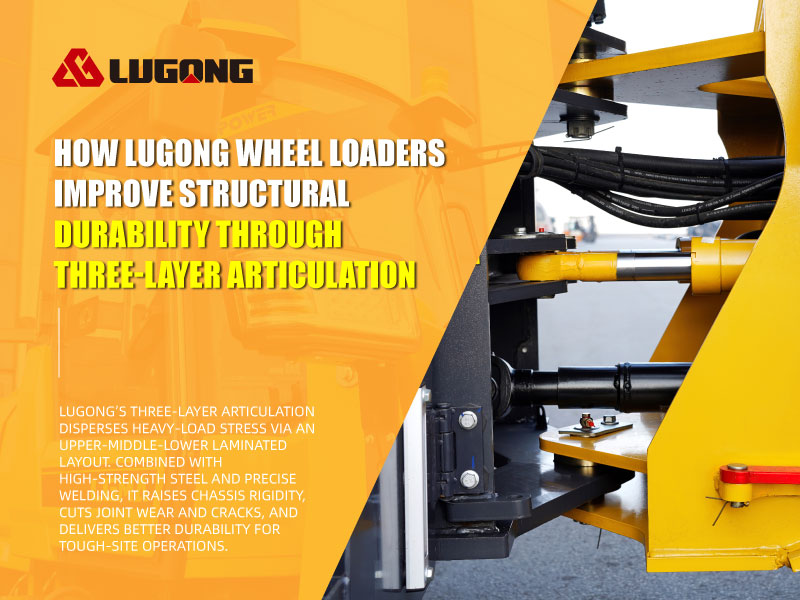
Three-Layer Articulation Design
Centralized Steering Cylinder: LUGONG unique “three-layer articulation” technology optimizes the steering cylinder position by relocating it to the center. This makes steering operations more flexible and responsive while reducing shear stress on the single-piece floor plate.
Multi-dimensional Stress Distribution Mechanism: When the machine is turning or carrying heavy loads, the addition of structural load-bearing layers ensures that the immense torque generated during turns is no longer concentrated at a single point but is evenly distributed across the entire articulation frame through three layers of plates.
Integrated Design of the Rigid Chassis Frame
Mortise-and-Tenon Welding Technology and Robotic Processes: LUGONG front frame employs robotic automated welding, while “mortise-and-tenon welding” technology—a fusion of traditional craftsmanship and modern technology—is applied to critical plate joints. This enhances operational flexibility while ensuring stability under heavy loads.
Heavy-Duty Drive Axle: Equipped with a dedicated drive axle independently developed by LUGONG, the wheel-end reduction uses a 22/57-tooth four-planetary gear structure, effectively enhancing low-speed torque.
Operator Protection: ROPS/FOPS-Certified Rugged Cab
Safety is another manifestation of durability. The LUGONG cab features a fully framed structure made of welded rectangular tubing and has strictly passed both ROPS and FOPS certifications. Combined with electrophoretic priming and electrostatic spray painting processes, this ensures the equipment retains exceptional resistance to oxidation and rust even in corrosive environments such as mines or fertilizer plants.
Frequently Asked Questions
Q1: Why does the three-layer articulated structure reduce maintenance burdens?
A1: Because stress is distributed more evenly, the rate of abnormal wear on pins and bushings is reduced. Users only need to apply grease at regular intervals. The original intent of this structural design was to reduce the frequency of future repairs through high-strength structural redundancy.
Q2: What role does the mortise-and-tenon welding process play in the frame of a wheel loader?
A2: Mortise-and-tenon welding is an embedded welding method in which steel plates are interlocked before being fusion-welded. The strength of this joint far exceeds that of simple butt welding. When subjected to longitudinal torsional forces on uneven terrain—such as in mines—the mortise-and-tenon structure effectively prevents weld cracking, ensuring the overall structural longevity of the wheel loader.
Summary
Through innovation in its core physical structure—the “three-layer articulation”—combined with the drive axle, mortise-and-tenon welding, and a safety cab, Shandong LUGONG has successfully transformed the most stress-prone areas of the wheel loader into a robust, rigid barrier, thereby enhancing structural durability.


 287
2026/09/04
287
2026/09/04