LUGONG LM150H Skid Steer Loader Analyzing the Synergistic Advantages of Hydraulic Drive and Track Chassis
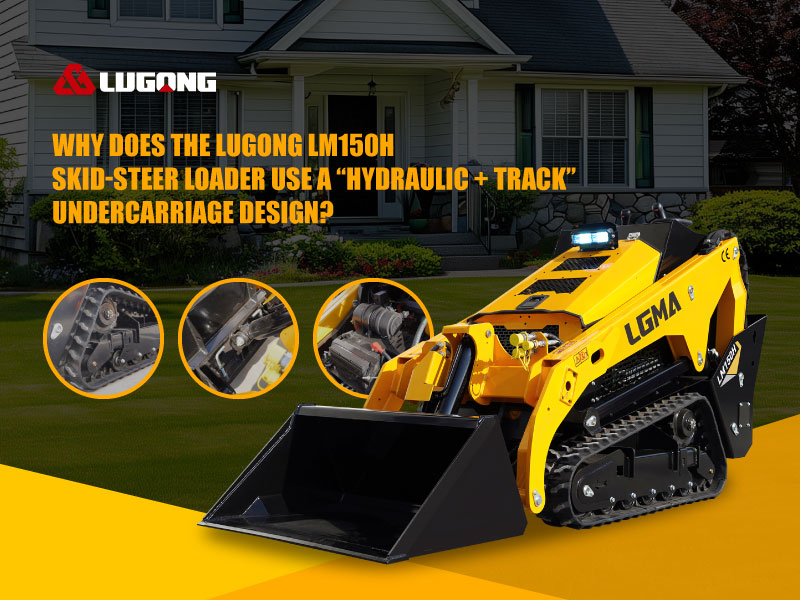
The chassis design of compact construction machinery directly determines the machine’s operational efficiency in complex working conditions. As a track-type skid steer loader specifically designed for confined spaces and challenging terrain, the core competitive advantage of the LUGONG LM150H skid steer loader stems from the high level of integration between its hydraulic drive system and rubber track travel system.
The Core of the LM150H’s Precise Power Control
The LUGONG LM150H employs a hydraulic transmission architecture. Its core hydraulic circuit features a deep integration of international-standard components, including the HANSA TMP variable pump, IMPRO travel motors, and CONCENTRIC gear pumps.
Speed Control Capability: Unlike traditional mechanical transmissions, this hydraulic architecture allows the LM150H to achieve smooth speed variation by adjusting hydraulic flow alone while maintaining a constant engine speed. This provides the operator with a high degree of operational flexibility during precision work.
Zero-Turn Radius: The LM150H’s hydrostatic system enables independent control of the track motors on both sides. By driving the tracks on both sides to rotate in opposite directions, the machine achieves precise on-the-spot steering from 0 to 360 degrees, which is the core technological foundation for its ability to maneuver effortlessly in extremely confined spaces.
Terrain Adaptability and Traction Performance of the LM150H
Addressing the physical limitation of wheeled equipment—which is prone to slipping in harsh terrain—the LUGONG LM150H comes standard with a high-strength rubber track undercarriage. By increasing the contact area, this significantly enhances operational versatility.
All-Terrain Performance: The track design substantially reduces the LM150H’s ground pressure. This design physically eliminates the risk of the machine becoming bogged down in muddy construction sites, sandy terrain, or loose garden soil, ensuring all-weather mobility.
High Power-to-Traction Ratio: Working in conjunction with the system’s operating pressure, the LM150H’s rubber tracks provide exceptional ground grip.
The LM150H’s Heavy-Load Capability and Stability
The LUGONG LM150H adopts a “hydraulic + track” architecture not only to enhance maneuverability but also to achieve high load-bearing capacity within an extremely compact chassis.
Rollover Resistance: With an operating weight of just 1,500 kg, the LM150H boasts a rated lifting capacity of 350 kg and a maximum tipping load of up to 780 kg.
Engine Power: This model is equipped with an 18.2 kW Kubota engine that fully complies with EPA Tier 4 Final emissions standards.
Frequently Asked Questions
Q1: How does the LUGONG LM150H skid-steer loader improve construction efficiency in confined spaces?
A: The LM150H uses its hydraulic drive system to independently power both tracks, enabling a turning radius of 0 mm. This zero-turn maneuverability allows it to navigate precisely within confined spaces, such as during renovations of older residential areas or indoor demolition projects.
Q2: How does the LUGONG LM150H perform on complex terrain with its track-type undercarriage?
A: Its performance is extremely stable. The LM150H’s rubber tracks significantly reduce ground pressure. Whether on muddy sites after rain or loose sandy terrain, it effectively prevents getting stuck; combined with the Kubota engine and hydraulic system, it delivers powerful, slip-free traction to maintain bulldozing and loading efficiency.
Summary
The LUGONG LM150H skid-steer loader is a highly mature system integration solution. While retaining the core maneuverability of a skid-steer loader—namely its “zero-turn” capability—it utilizes a tracked undercarriage to completely resolve the challenges of low ground pressure and high-load stability. For professional buyers seeking to improve operational efficiency in complex and confined working conditions, the LUGONG LM150H is an ideal mechanical solution backed by rigorous engineering validation.


 238
2026/03/23
238
2026/03/23